AI Calling Agent vs. Answering Service: Which Is Better for Home Service Businesses?
Two Different Ways to Solve the Same Problem
If you run a roofing, HVAC, or plumbing business and you're tired of missing calls, you've probably looked at two options: a traditional answering service, or an AI calling agent. They sound similar on the surface. Both promise your phone gets answered when you can't get to it. In practice, they work pretty differently, and the difference matters for a home service business specifically.
How a Traditional Answering Service Works
A human answering service routes your calls to a live operator, usually working from a general script, who takes a message or basic details and passes them along. It's a real person, which has upsides: they can improvise, and callers know they're talking to a human.
The tradeoffs show up in a few places. Operators usually work through a generic script that isn't specific to roofing, HVAC, or plumbing, so they often can't ask the detailed, trade-specific questions that actually help your team triage a job (roof age and damage type, system age and the specific issue, or what's actually leaking and how bad it is). Most services also charge per minute or per call, so cost scales unpredictably with call volume, and volume is exactly what spikes during a storm or a heat wave.
How an AI Calling Agent Works
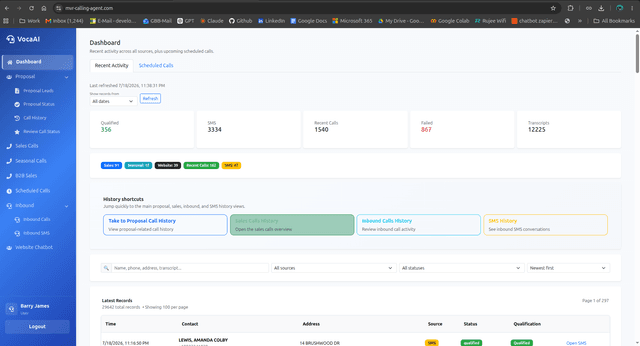
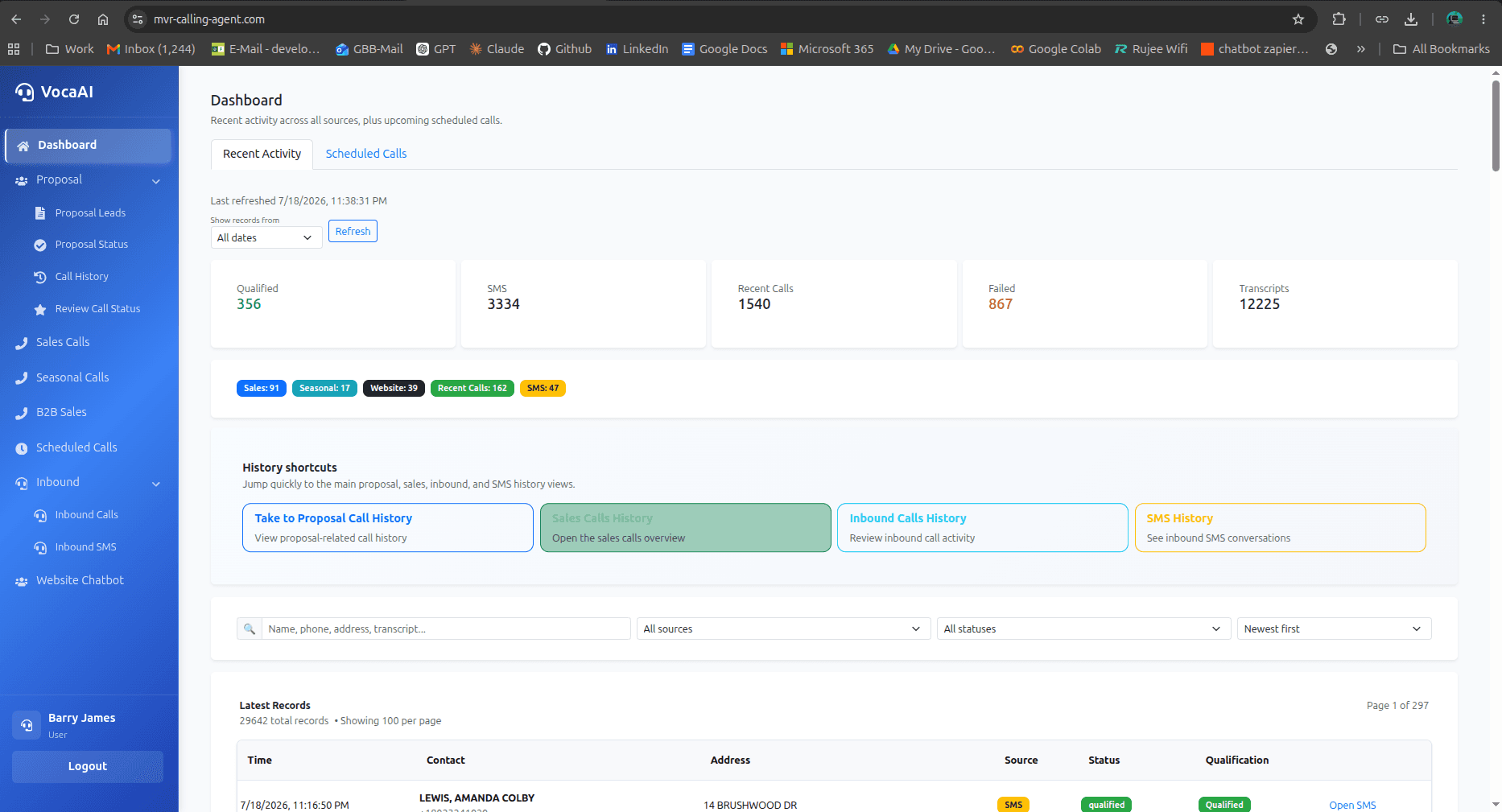
An AI calling agent answers every call itself, holds a real voice conversation, and asks the specific questions that matter for your trade. It captures the address, the issue, and the urgency, then either books the appointment directly on your calendar or sends the details straight to your team.
The biggest practical difference shows up during a surge. A human answering service, even a good one, can only handle one caller at a time. An AI agent answers every inbound call simultaneously, so a storm-driven or heat-wave-driven spike doesn't mean half your calls go to voicemail or a busy signal.
Where Each One Actually Falls Short
Neither option is perfect for every situation. A traditional answering service is a reasonable fit if your call volume is low and predictable, and you specifically want a human voice on every call regardless of cost.
An AI calling agent isn't the right fit if you want zero setup and don't care about integration with your CRM or calendar. It takes a short setup process to configure it around your business, which a generic answering service skips entirely because it isn't built specifically around your operation.
What Actually Matters for Roofing, HVAC, and Plumbing Specifically
These three trades share a pattern: call volume spikes unpredictably (a storm, a heat wave, a cold snap), the jobs are often urgent, and the details that matter (roof damage type, system issue, or the specific plumbing emergency) are trade-specific enough that a generic script misses them.
That's the gap I built AI calling agents for roofing, HVAC, and plumbing companies to close. Each one is set up around the actual questions and urgency signals specific to that trade, not a one-size-fits-all script.
If you're deciding between the two for your business, book a free missed-call audit and I'll give you a direct read on which one actually fits your call volume and budget.
Have a similar problem to solve?
I build production AI systems like this one — calling agents, chatbots, and automation — for real businesses. Tell me what you're trying to build and I'll tell you honestly if it's a fit.